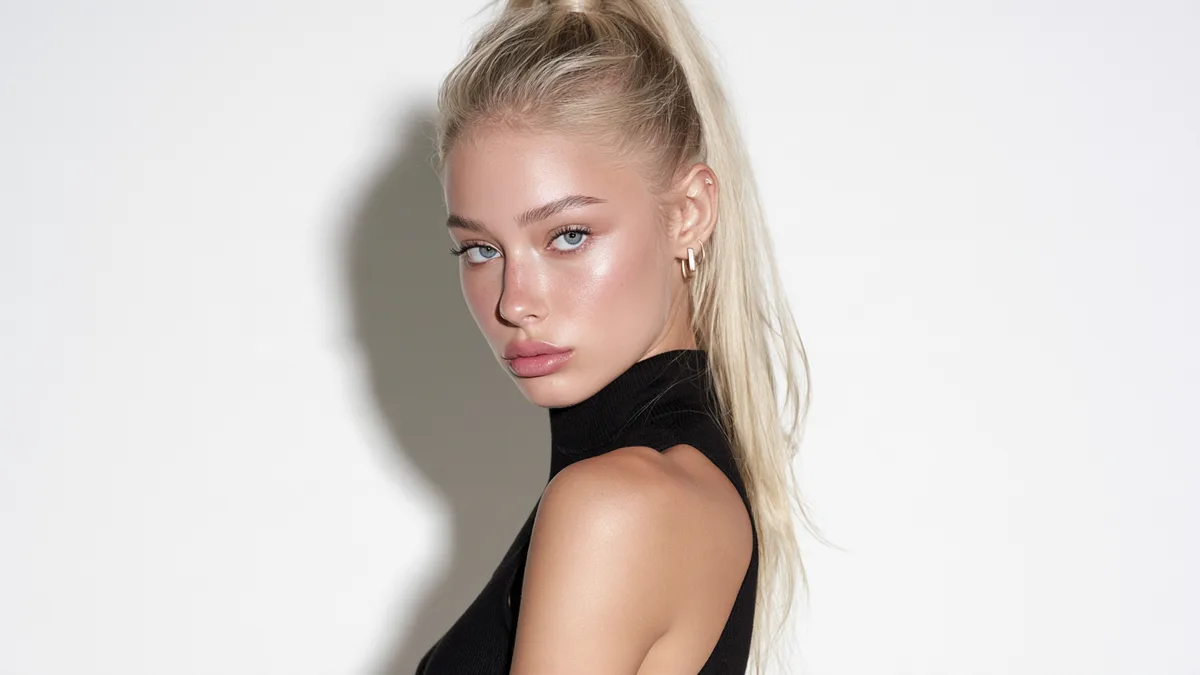
You generate a face you love. You ask for the same woman in a café. Someone similar turns up: same hair, same jacket, different person. That is drift, and it is the first wall everybody hits when they try to build a consistent AI character.
It is not a bug in your prompt. It is how image models work. This guide covers why the face changes, what the usual fixes actually fix, what a trained identity does differently, and a checklist to test whether a character really holds.
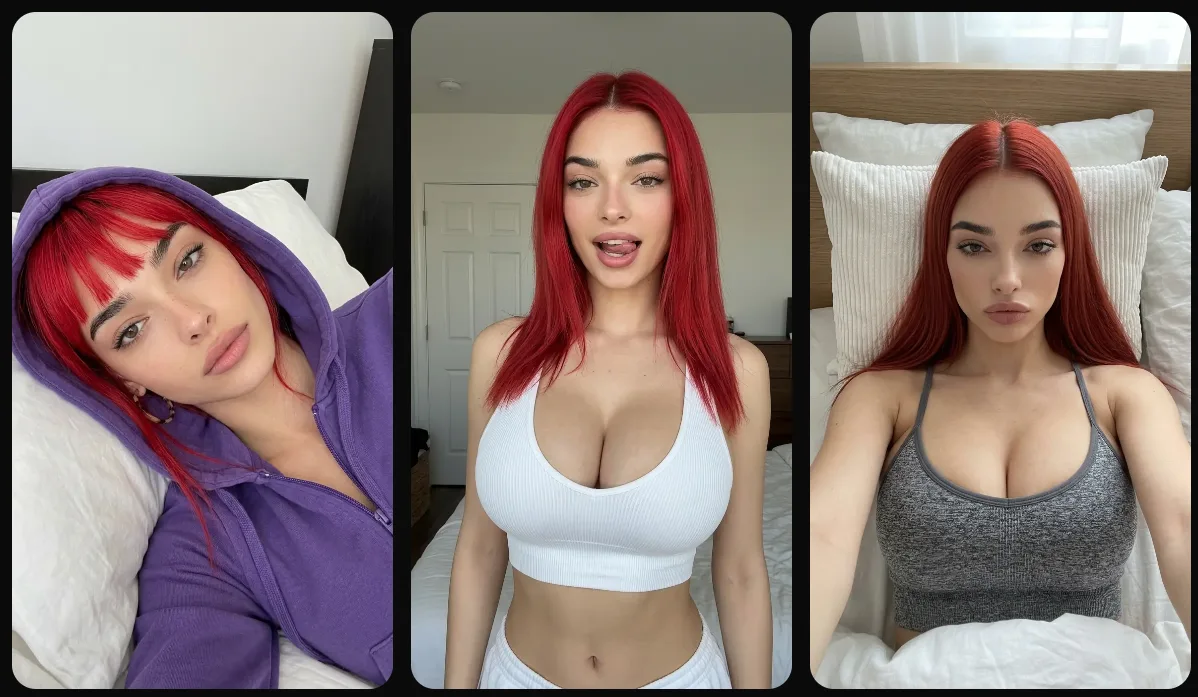
Why the face changes every time
Image models do not remember. Each generation starts from fresh random noise and works towards a picture that fits the prompt. The documentation for Diffusers, a library for running these models, puts it plainly: diffusion is a random process that generates a different output every time.
A prompt narrows the result. It does not pin it. "A woman in her late twenties with brown hair, green eyes and freckles" describes a very large number of people, and the model is free to hand you any of them. Prompts specify scene, wardrobe, lighting and camera well, and identity badly.
So nothing is going wrong when the face drifts. The model is producing a plausible image for the text. Nobody told it who she is.
Why a consistent AI character matters
For a single image, drift is irrelevant. For anything that runs longer than one post, it is the whole problem.
Followers recognise a face at thumbnail size, or they scroll past. A catalogue shot on a model who changes between listings looks assembled, not shot. A video cut next to a still of a slightly different woman breaks the illusion in one frame.
An audience follows a person it expects to see again. The fiftieth post only works if it is obviously the same woman as the first.
The fixes people try first
Three of them, usually in this order.
Writing a longer prompt
The instinct is to describe her harder. A prompt is good at the broad strokes, such as hair colour, age range and styling. It is a description, though, and a description is not an identity. In our view, that is the wrong tool for holding a face.
Locking the seed
The seed is the number that initialises the random noise. The same seed with the same prompt and the same settings reproduces the same image, which feels like the answer.
It is not. You do not want the same image, you want the same person in a different one. Change the prompt to move her from the café to the beach and you have changed the inputs, so the result changes with them. Even exact repeats are not promised: the Diffusers documentation notes that you can limit randomness, but identical output is not guaranteed even with an identical seed. A seed is a reproducibility control, not an identity control.
Using a reference image
This one works differently. You hand the model a picture of the face alongside the text, and it steers towards that picture. IP-Adapter is one published method of this kind. Its authors describe a lightweight adapter that adds image-prompt capability to a text-to-image model, while the underlying model stays frozen.
Note what that means for you. A reference steers each image from outside. It does not teach the model the person, so you supply the reference every time. Before you rely on it, test the shots that sit furthest from your reference: a profile, hard side light, a wide shot where the face is small in the frame. Tools differ, so test rather than assume.
What a trained identity changes
Training takes the other route. Instead of reminding the model who she is on every generation, you teach it once.
The research behind this is public. DreamBooth, a method published by researchers at Google, takes just a few images of a subject and fine-tunes a text-to-image model so that it binds a unique identifier to that subject. The authors describe the subject then being synthesised in scenes, poses, views and lighting conditions that do not appear in the reference images. That is the important part: new poses and new light, not a copy of a photo.
LoRA, short for Low-Rank Adaptation, is a lightweight way of doing that training. Rather than retraining the whole model, it inserts a small number of new weights and trains only those, which makes training faster and the resulting weights smaller. The output is a small file trained on top of a larger image model to teach it one specific subject. Here, one face. The glossary has plain-English entries for LoRA, seed and consistency if you want the definitions side by side.
The practical difference is where identity lives. With prompts and references, it is an input you supply every time. With a trained identity, it is part of the model, and everything else becomes the variable: the hair, the outfit, the city, the lighting, the format.
Famebase treats the identity as the asset. You train the identity once instead of describing it every time. From then on every tool in the studio, from photos and video to Recreate and outfit changes, works from that same trained face. You can arrive at it two ways:
- Take one already trained. Every model in the Marketplace is a 1-of-1. It is sold once and arrives trained and ready to create.
- Upload your own. Already have a character living in a folder of images? Upload it in and train it. The pricing page shows which plans include this.
Training does not excuse you from checking. Which brings us to the useful part.
How to test a consistent AI character
Run this before you build an account, a catalogue or a campaign on any face, from any tool. Generate the set, put the images side by side, and look at them small first, then at full size.
Angles
- Straight on, three-quarter and full profile.
- Looking up and looking down.
- A close crop and a full-length shot where the face is small.
Does the nose keep its shape in profile? Is the jawline the same from both sides?
Lighting
- Soft daylight.
- Hard sun with real shadows.
- Indoor evening light and a studio setup.
Light changes how a face reads. It should not change whose face it is.
Outfits and styling
- Casual, formal, sportswear, swimwear.
- Hair up, hair down, a hat, sunglasses pushed up.
- Heavy makeup and none.
Hair and makeup are styling, not identity. If changing the outfit quietly changes her age or her build, the identity is leaking into the wardrobe.
Expression
- Neutral, smiling, laughing, serious.
Check the big smile closely. Teeth, eye shape and cheeks all move at once.
Video
- A walk, a slow head turn and a talking clip.
- Pause on several frames and compare each with your best still.
Stills hide things that motion shows. The face has to hold in the frames between the poses, not just in the poses.
The stranger test
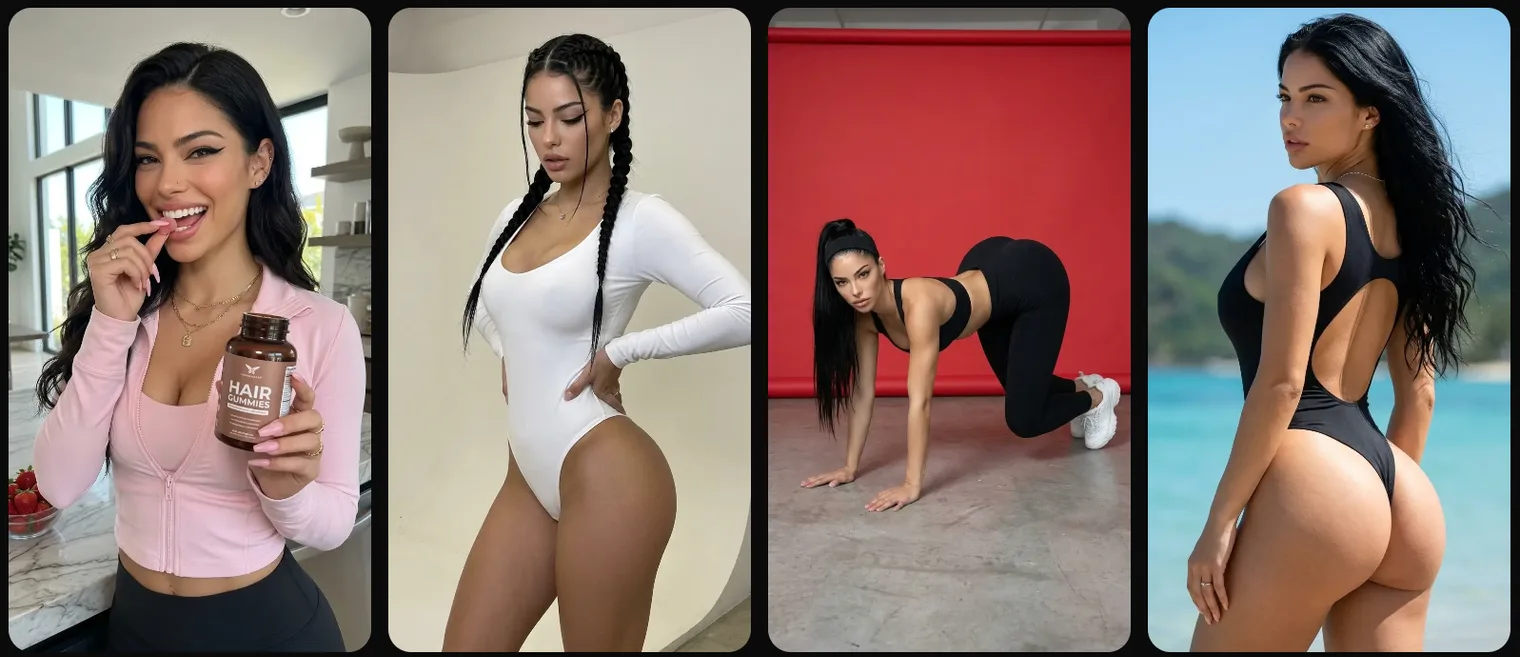
Mix ten of your images with a few of a similar-looking face. Show the grid to someone who has never seen the character and ask them to pick out the odd ones. If they cannot, the identity is not distinct enough yet.
What to do when it fails
If the character fails on angles and lighting, the identity is too thin. More adjectives will not fix it. It needs training, or better training.
If it fails only on one kind of shot, note which one and work around it until it is solved.
If it passes, stop testing and start posting. Feedroll has 10,000+ concepts to recreate with the same face, and the rest of the creation tools run on that identity too.
New to the format altogether? Start with What is an AI influencer?, then come back and run the checklist.
Questions, answered
Why does my AI character look different in every image?
Image models start each generation from fresh random noise, and a text prompt describes a face too loosely to pin one person down. Without something that fixes the identity, you get a new, similar-looking stranger each time.
Does using the same seed keep an AI character consistent?
No. The same seed with the same prompt and settings reproduces the same image, but changing the prompt changes the result. A seed is a reproducibility control, not an identity control.
Are reference images enough for a consistent AI character?
It depends on the tool and the shot. A reference steers each image from outside rather than teaching the model the person. Test profiles, hard light and wide shots before you rely on it.
How do I test whether an AI character is consistent?
Generate the same character across angles, lighting, outfits, expressions and video, then compare the results side by side at thumbnail size and at full size. If a stranger cannot tell your images from a similar face, the identity is not holding.